Abstract
An electromagnetic braking system is a modern braking mechanism that utilizes electromagnetic forces to control the motion of a vehicle or mechanical system. Unlike conventional braking systems that rely on frictional contact, electromagnetic brakes operate by generating magnetic fields to create resistance, leading to smooth and efficient braking. These systems are widely used in various applications, including electric bicycles, industrial machinery, and automation systems, due to their quick response time and reduced wear and tear. The integration of key mechanical and electrical components ensures precise control over braking performance, making them a reliable alternative to traditional braking methods.
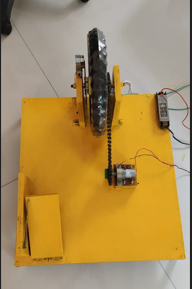
The main components of an electromagnetic braking system include a 12V DC motor, a wheel, a freewheel mechanism, a chain drive, a pedal mechanism, an electromagnetic device, and a disk brake plate. The 12V DC motor provides power to the system, enabling controlled motion. The wheel and freewheel mechanism work together to allow movement while ensuring smooth braking engagement. The chain drive transfers power from the pedal mechanism to the wheel, maintaining efficient torque transmission. The electromagnetic device, which is the core component, generates a magnetic field when current is applied, creating resistance that slows down or stops the wheel. The disk brake plate works in conjunction with the electromagnetic device, converting the magnetic force into braking force to halt the system effectively. The working principle of the electromagnetic braking system is based on electromagnetic induction. When the system is activated, electrical current passes through the electromagnetic device, generating a magnetic field. This field interacts with the disk brake plate, inducing eddy currents that create resistance and slow down the rotation of the wheel. Unlike traditional braking systems, this process minimizes mechanical wear, reducing maintenance costs and improving the system’s lifespan. Additionally, the braking force can be precisely controlled by adjusting the current supplied to the electromagnetic device, allowing for smooth and efficient stopping. This makes electromagnetic braking systems ideal for applications where precise and rapid braking is required.