ABSTRACT:
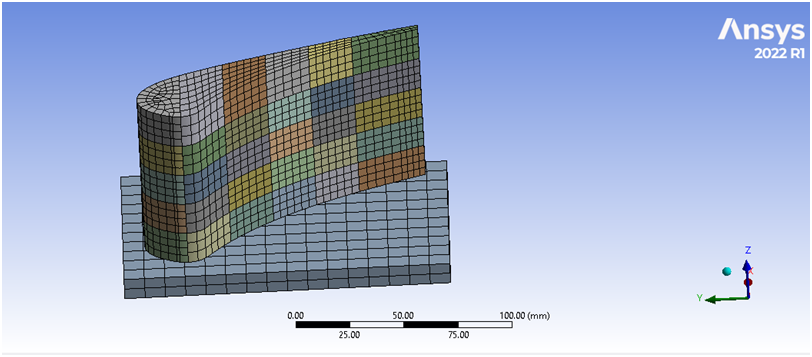
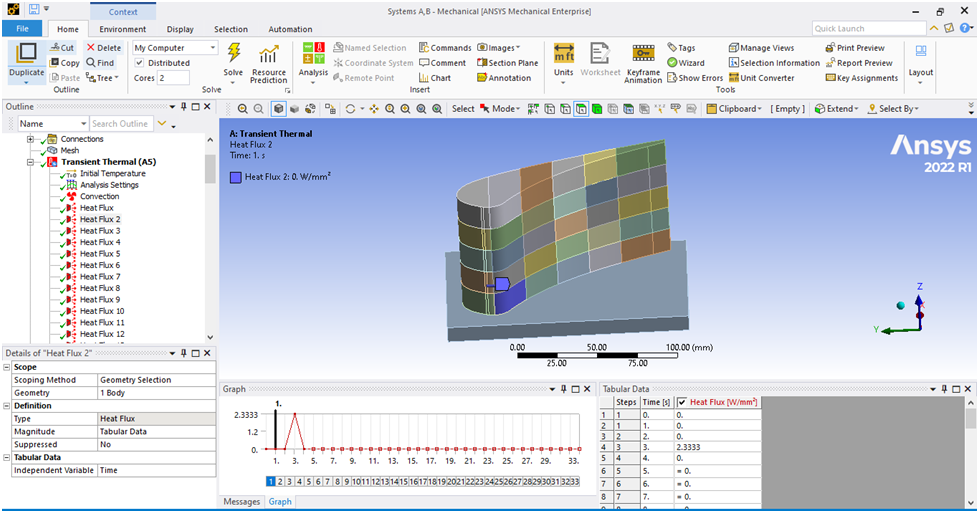
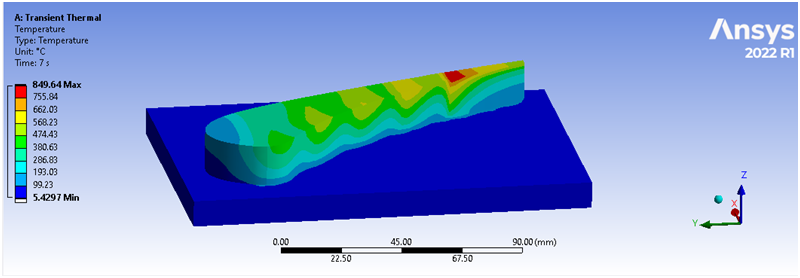
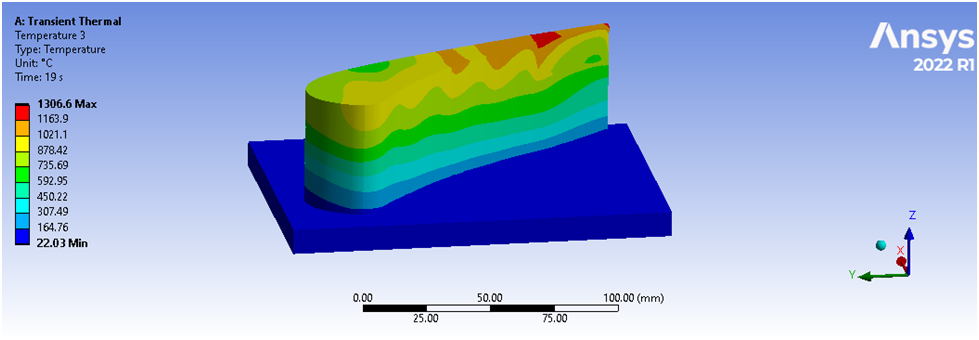
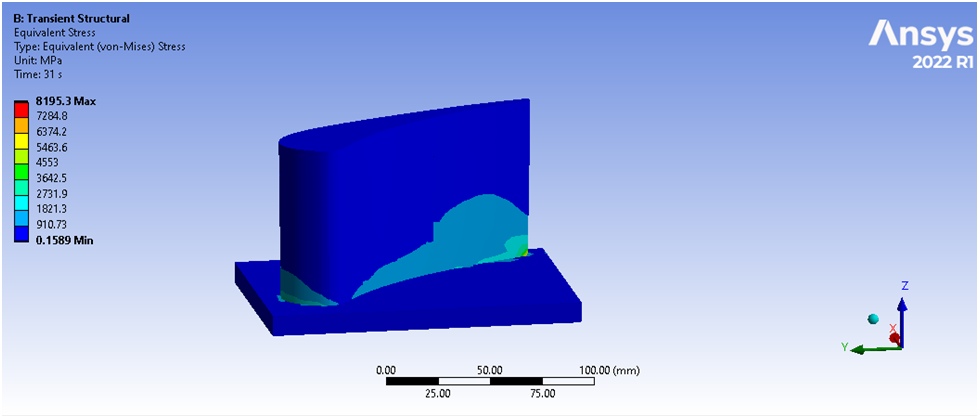
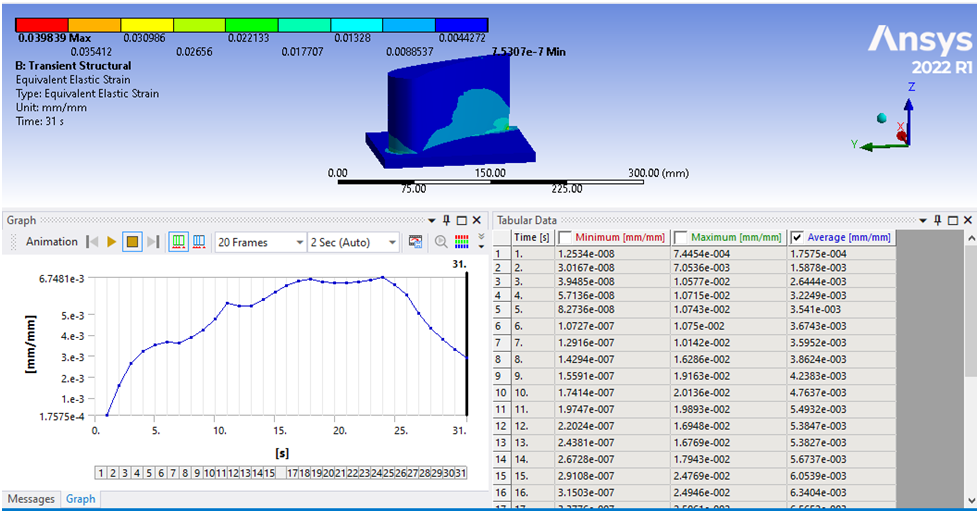
This study focuses on analyzing the process parameters involved in the direct energy deposition (DED) method of additive manufacturing, specifically for the production of gas turbine blades used in aerospace applications. The C3X gas turbine blade geometry, obtained from previous research, was modeled in 3D using CATIA and subsequently analyzed using ANSYS software. To simulate the additive manufacturing process, the element birth and death technique was employed to represent the layer-by-layer material deposition. A transient thermal analysis was carried out to assess the thermal behavior during deposition at different laser powers (2500 W, 3000 W, and 3500 W) and varying deposition speeds (5 mm/s, 7 mm/s, and 10 mm/s). The resulting temperature distributions were then used in transient structural analysis to evaluate the development of residual stresses during the heating and cooling cycles. By analyzing the thermal and mechanical responses of the blade under different process conditions, the combination of 10 mm/s deposition speed and 2500 watts laser power was identified as the optimal parameter set for fabricating an Inconel 617 gas turbine blade with reduced residual stresses and improved structural performance.
Aim:
The aim of this project is to analyze and optimize the process parameters of the direct energy deposition (DED) method in additive manufacturing for fabricating gas turbine blades, using thermal and structural simulations to determine the optimal laser power and deposition speed that minimize residual stresses in Inconel 617 components.
Objective:
The objective of this project is to conduct a comprehensive analysis of the direct energy deposition (DED) process parameters used in additive manufacturing of C3X gas turbine blades. This involves developing a 3D model of the blade in CATIA, performing transient thermal and structural analyses in ANSYS using the element birth and death technique, and evaluating the effects of varying laser power and deposition speed on temperature distribution and residual stresses. The study aims to identify the optimal combination of process parameters—specifically laser power and deposition speed—that result in minimal residual stress and optimal thermal behavior for Inconel 617 turbine blade fabrication.